Jepara –
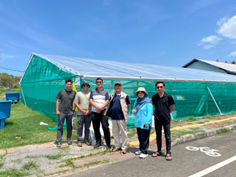
The Natural Feed Laboratory Team of the Aquaculture Study Program, Faculty of Fisheries and Marine Science (FPIK), Universitas Diponegoro, conducted a large-scale mass culture of the microalga Spirulina platensis at the UNDIP Teluk Awur Campus, Jepara.
This activity is part of a research project under the Applied Research Scheme – Prototype Output, funded by the Ministry of Higher Education, Science, and Technology (KEMENDIKTISAINTEK) in 2025. The research is led by Dr. Diana Chilmawati, S.Pi., M.Si, and involves researchers and technical staff from the Natural Feed Laboratory of the Aquaculture Study Program, Universitas Diponegoro.
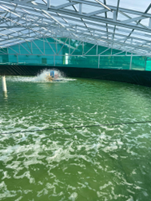
The mass culture of Spirulina platensis was carried out using a circular pond with a diameter of 16 meters, specifically designed to support large-scale microalgae biomass production. This culture system is expected to produce Spirulina with high productivity and stable quality, making it a promising raw material for natural feed and functional feed in aquaculture practices.
According to the Head of the Research Team, Dr. Diana Chilmawati, this activity aims to develop an applicable prototype of large-scale microalgae culture technology that can be widely utilized for further research, educational purposes, and the development of the aquaculture industry.
“Spirulina platensis culture has significant potential in supporting sustainable aquaculture, particularly as a natural nutrient source rich in protein, pigments, and bioactive compounds such as beta-carotene,” she explained.
In addition to research activities, the implementation of this mass culture also serves as a field-based learning platform for Aquaculture students, especially in understanding large-scale microalgae production techniques, water quality management, and open culture system operations.
Through this activity, the Aquaculture Study Program of FPIK UNDIP continues to demonstrate its commitment to developing applied research oriented toward innovation, sustainability, and strengthening the downstream utilization of research outputs in the field of aquaculture.